
Showing posts with label Loni Anderson. Show all posts

Thursday, November 30, 2023

A Divas Christmas on Lifetime

Back in the spring of 1985, I first heard about a pilot being filmed in Los Angeles called The Golden Girls, the cast of which was to be like a supergroup of the best women in TV comedy.  I got a similar feeling when earlier this year, I first heard about Lifetime’s new holiday movie, Ladies of the ‘80s: A Divas Christmas, starring five TV legends:  Linda Gray, Donna Mills, Morgan Fairchild, Loni Anderson and Nicollette Sheridan.  And to top it all off, the film was written by Stan Zimmerman and James Berg, a team who got one of their earliest jobs on the first season of The Golden Girls and went on to write for other female small-screen icons, from Roseanne to the title characters of Gilmore Girls.

 As Stan Zimmerman prepares not only for the Ladies of the ‘80s premiere – 8PM Eastern/Pacific, this Saturday, December 2 on Lifetime -- but also the February 13, 2024 release of his memoir, The Girls: From Golden to Gilmore, I sat down with him to talk about what we can expect from our eagerly anticipated date with the Divas this coming weekend. 

The Ladies of the '80s: A Divas Christmas cast (l-r):  Donna Mills, Loni Anderson, Linda Gray, Morgan Fairchild and Nicollette Sheridan, with writer Stan Zimmerman at The Maybourne Hotel, Beverly Hills, CA, November 28, 2023.


Must Hear TV: Where did the idea come from, to do a Christmas movie for Lifetime, reuniting divas from the ‘80s? How did it all come together?

Stan Zimmerman: I have to give credit to Jason Wood, who is now head of casting at Lifetime. He was the casting assistant on the very first pilot Jim Berg and I wrote, and then became our assistant.  We've remained in touch, and we were talking about him coming to see a production I just directed in Los Angeles of the play “The Diary of Anne Frank,” with a cast of predominantly Latinx actors, because I wanted him to discover some of those talents that he didn’t yet know.  When we were talking one day, he mentioned, “There’s a project here at Lifetime – would you mind if I threw your hat in the ring, for you and Jim to pitch for this?”  He told me the basics they already had:  they had a deal with five iconic actresses, and wanted a Christmas movie, which had to be shot in just thirteen days, and in only one location.  I said, “Give me 24 hours.”  And then Jim and I came back in 24 hours and pitched ideas for the film to the producer, Larry Thompson.  This was so on-brand for Jim and me, right up our alley!  So we were bursting with ideas.


MHTV:  That’s all they had at that point?  Unite these women in a Christmas movie?

SZ:  Yes.  The rest was up to us. The hardest part was the one-location thing. We could redress that one location, so it could be a mansion, it could be a hotel.  All the rooms could be turned into other locations.  We could use the parking lot, or shoot a scene in a car in the driveway.  But it had to be shot in one location in 13 days. This was in March of 2023. Jim and I were in Dallas, about to world premiere our play, “Silver Foxes,” and so our heads were in that space. But we knew this was an opportunity we just couldn't pass up. And so we pitched maybe six or seven ideas, and Larry Thompson liked all of them. And then something happened that you don't hear very often:  he said to us, the writers, “What do you guys want to do?”  With the time crunch, the idea that really jumped out as our favorite was based on what all these women are known for, and that was soap operas.  Almost all of them had started on, or at one time were on a daytime soap opera.  I was an ABC soap freak as a kid:  All My Children, One Life to Live, General Hospital.  I did some research and found out like Donna Mills had started in a soap called Love is a Many Splendored Thing, a CBS show back in the day.


MHTV:  Never mind Knots Landing!  In your mind and Jim’s, is this more based on daytime soap or primetime? Because when I see names like Donna Mills, Nicollette Sheridan, Morgan Fairchild and Linda Gray, I think of primetime soaps.

SZ:  Yes.  But the concept for the film was that, because all of these daytime soap operas are being canceled, there was a daytime soap opera called “The Great Lakes.” And at one time or another, all of the divas were on that show.  Now, the show is being canceled. Jim and I have often wondered, why are daytime soap operas not as popular anymore?  Why haven’t they been reinvented?  So for our movie, what if they come back for one final Christmas episode, done live. And play off of their daytime diva and nighttime diva images.  And with those crazy storylines that daytime soap operas have, we thought it'd be really fun and campy. In our minds, that was what the audience would be craving. When they heard about these five ladies coming together, they’d want those bitchy lines. They want the slapfest. They want the crazy storylines. So Larry agreed, Lifetime agreed, and we made a deal very quickly. And off we went to writing.  We had so little time, that there were days when I was at the Golden Girls convention “GoldenCon” in Chicago this past March where I would have to go up to my hotel room on breaks and meet Jim on Zoom to write some scenes and bang out that first draft.  Because we had a deadline of May 1, which was the writers' strike. So we knew:  computers off May 1.


MHTV:  And that is a crazy short time to write a movie.

SZ:  It’s a crazy short time to write an email. Because there are so many levels of people that have to weigh in. It’s not just, “it’s March, Jim and Stan, write whatever you want.” You have to write outlines. And I wanted an outline to be approved.  I hate wasting time when I'm writing. So I wanted everybody to sign off first.  Jim and I are experienced veterans at this, and they were actually going to give us more latitude, to go off and write, but I was very adamant about, “No, you're seeing an outline” -- or what we call a beat sheet, which is kind of an abbreviated outline -- to sign off on the basic beats of the plot.  That way, after getting approval, we could then write scenes quickly. I always think that's easier.

I love the structure part of developing scripts. For some reason, my mind just thinks that way. On sitcoms, I would always be the one taking writers off into a room and do what we call beating out the story and the structure of it. So once we got the structure, that pretty much stayed the same. And we wrote really, really quickly. I think that was one of the solid points of hiring us as writers, because we kept saying to them, “We're used to writing fast on sitcoms,” where sometimes a script gets thrown out on the day of a rehearsal, and you have to be rehearsing a different script the next morning.  So you might have to do a page-one rewrite sometimes. From all the shows that we've been on, from Golden Girls to Gilmore Girls and Roseanne, or Rita Rocks for Lifetime, we’ve experienced every single thing you can imagine. Here, luckily, they were happy and we didn't get a ton of notes.  Because on May 1, we had to stop. We would love to have continued working, and to have gone on set.  I kept joking to Jim, “I'll dress as a grip, and I’ll have a mustache and a hat and overalls or something, and just stand behind a potted plant.”  Of course I couldn’t do that, because of the strike.  But we were able to talk to the actresses on the phone during our writing process, to get their notes. And that was really cool.


MHTV:  How much were the actresses able to shape their characters? 

SZ:  Quite a bit.  Before they signed off, they all either had phone calls – one of the original actresses who was going to be in the movie, Joan Collins, sent in written notes, because she was in England -- but with the others, we got on the phone and had long conversations that were really interesting.


MHTV:  And was that a dream for you?  Had you met all of these women before?

SZ:  I had not met most of them, which was crazy, because most of them hadn't done sitcoms, except Loni Anderson.  I had met Joan Collins, when Jim and I had developed a show for her. We always thought she was really funny. And she ended up being on Roseanne, but not when we were there.  But because people are obsessed with royalty in America, so we pitched a show for her and Rupert Everett as royalty that had to flee their country with nothing but their titles, and then came to America, and were scamming in Beverly Hills. And she loved it. And we spent time with her in her home in Beverly Hills. We happened to be in Europe and went to her house in London. That story is in my book…


MHTV: Which is…?

SZ:  The Girls: From Golden to Gilmore.  It’s the story about all the wonderful women that I've worked with. And Roseanne.  There is a section about the developments that we had with so many wonderful women, and that that chapter is called “The Next Lucy,” because all of these actresses that we would meet with, from Joan Collins to Teri Hatcher to Miss Diana Ross, they all said at one point in the meeting, “I want to be the next Lucy.”  And we all know there can never be another Lucy.  It’s a tall order.  But we felt we could tap into what was funny about Joan Collins and her dry, very Oscar Wilde sensibility. But unfortunately, the show never came to be. 

When we spoke with all the actresses, they gave us ideas on how to deepen their characters.  And because we had really studied a lot of their interviews online, we pulled from their real stories. So for example, we found out that Donna Mills had adopted a child, so we put that into the character -- but we bumped it up to where she had adopted five or six children, in the Angelina Jolie or Madonna category.  And another actress who was originally going to be  part of the cast, Jaclyn Smith, is such an entrepreneur. So we created a storyline about giving up a lot of show business to start her own businesses. And has she been so obsessed that she has neglected relationships?

Ultimately, because of the actors’ strike, they literally had a very short window to film this. So the good part was they had to film the script we wrote. But the bad part was that it was hard for the actresses to rearrange their schedules with short notice, and so Joan and Jaclyn dropped out, even though they loved the script.  After that, Morgan Fairchild switched roles and ended up playing the one written for Joan.  No fool, she knew where the jokes were!  And she does have a lot of one-liner zingers that are going to make memes one day, I just know it.  I’m hoping.  On the level of some of the other lines Jim and I have written, like “Sure, Jan,” from The Brady Bunch Movie, or from The Golden Girls, “No, no, I will not have a nice day,” which I see all the time, people imitating it, which is really cute.  This is a very different kind of Lifetime Christmas movie, because A, it’s a comedy.  But there is a lot of romance in there. There are some very heartfelt moments as well.  I have to admit, I get a little teary at the end. I wasn't sure if I wanted to put in a part about how the young male lead was affected by his mother's passing. But it's something I'm still dealing with. And I realized that not only would it be therapeutic for me, but maybe for other people as well.


MHTV:  Of course.  The holidays are when everybody thinks about relatives they've lost.

SZ:  So there's a line in there, when the guy says, “A part of me died when she died.” And especially during the holidays, and not being with her on Thanksgiving, this year was pretty difficult for me. So I was glad that they allowed us to keep lines like that in there. Also, it was fun to name the young lead female after my niece, Nell.  That’s always fun to do.


MHTV:  Speaking of the names, I love the device of giving all the characters the names of their famous TV characters, like Ewing and Cunningham and Marlowe.

SZ:  It's honoring their past, and what they bring so beautifully to this project. And I think that's why this storyline works so well, because when they arrive, they literally come with a lot of baggage, but also good baggage from their long careers in this genre. 


MHTV:  With your writing background, obviously, people might get a sense of The Golden Girls from this movie – although on The Golden Girls, Rue McClanahan was only 51 when the pilot was made. Here, everyone in this movie is older than that. And yet they're still vital, and they're still playing sexy roles. In what ways, consciously or maybe even subconsciously, were you affected by your Golden Girls experience when creating this movie?

SZ: Well, that was such an important part of Golden Girls, showing these women as vital and sexual and working and with relationships and conflicts. And I know that's an important part for Donna Mills, that she wants to show that you don't have to just sit in a corner after 60.  You can sit in a corner if you want to, but you can also go off and make a Jordan Peele movie like Donna did.  And I really respect that about her.  That's been the theme in our work, that no matter what age, you keep living. And every day you wake up, and the joy that I have of jumping out of bed.  Although sometimes now I make some grunting noises.

We wanted to give all these characters jobs and emotions, and love.  To have Linda Gray be with hot Christopher Atkins!  As a gay man, I remember being young and watching The Blue Lagoon.  I think I looked at pictures of him in that for a long time.  So it's exciting to reunite them, since they played lovers on Dallas.


MHTV: What are the challenges to writing a Christmas movie? How do you get in the Christmas mood in March?

SZ: Christmas movies are a breed unto themselves. When Jim and I were writing it, we had to think, how can we cram every single little bit of Christmas into every scene and shot?  And then they still were yelling, “More Christmas!”  And we were like, what more can we do?  So you have to be clever about how you put it in so it seems organic. Scenes around a Christmas tree.  Or because the movie is about the making of a TV show, we could have fun with shots, where it looks like it’s snowing, and then you pull back and reveal how we’re actually in sunny California.  We even got meta at the end, talking about how they can turn this into a reality/soap opera for today’s day and age.  Or they could go off and make a Valentine's movie. So we're hoping that the audience watches the movie and that it's so popular that we can continue with these characters and add a few more divas.


MHTV:  Obviously Joan Collins and Jaclyn Smith couldn't make it this time, but maybe later? Are there more divas on tap if this goes further?

SZ: I literally have divas driving around my house, honking, asking, “Where is the script?”  That would be the fun part. I have many friends like Joan Van Ark who I would love to be in the movie, and it would be great to bring Michele Lee into it. 

The business now, I think it's just trying to get back up on its feet and figure itself out. I think Lifetime has been a little overwhelmed with the response to this movie already, before it has even aired, but I'm not.  I told them, people are going to go nuts when they hear these five actresses are in this movie together!  There's a need to celebrate older women, and especially these women with what they've accomplished in their lives and what they're still accomplishing, and yet also to have fun with it and not take it too seriously. So I think there's so many more stories to delve into with these characters and other characters in that age group that I hope we get to do that.


MHTV: Certainly, if The Golden Girls could come up with seven years’ worth of stories, you've got plenty to say as well.

SZ: I'm sure they have some ex husbands.  It could be, “Hi, it’s me, Mort,” instead of Stan Zbornak.


MHTV: What is the update with “Silver Foxes,” your gay male version of The Golden Girls that you mentioned you staged as a play in Dallas this past spring?

SZ: When Jim and I first wrote “Silver Foxes,” we had a reading of it in my living room with Leslie Jordan and George Takei. We had created it for Logo as a half-hour sitcom, but when we found that no television network wanted to deal with an older demo or gay audience, we turned it into a play and had that sold-out run in Dallas, that Michael Urie from Ugly Betty and Shrinking directed. Actually, I found out today that there is a gay theatre company in Dublin, Ohio, that just secured the rights for the next production, which will be in September of 2024. So I'm going to go there for opening night. I won’t be involved in the play, but they want me to come and do a Q&A. Recently, we had a wonderful reading of the play in New York City that Michael directed. So we're really hoping to get it off-Broadway. That's our goal -- and then eventually, it becomes so popular that will become a TV series.


MHTV: With the Divas, these women are famous and beautiful and beloved. Why do you think there haven't been more vehicles for them to be doing stuff lately, and for others in their age group?  Do you think that it's going to change with things like this movie, or maybe with “Silver Foxes?”  What is it going to take to change things? 

SZ:  Personally, I don't think even the success of this will change things.  I think people in the entertainment business unfortunately have very narrow minds of what the audience is. And they don't see the value in portrayals of older people.  Meanwhile, young people adored Betty White up until the very end. And these kinds of shows don't just attract an older demo, but it's hard for executives to see that. They attract all people.  Most young people have grandparents that they love, and they could watch it and laugh with them -- or watch it and call them after and understand them more. Yes, of course, I'm always hopeful, but I've just been around this so much. And I am still a half glass full kind of guy, so I do hope that this can change things. But I'm going to keep working and pushing these kinds of shows and these kinds of characters, whether networks come running at us or not.


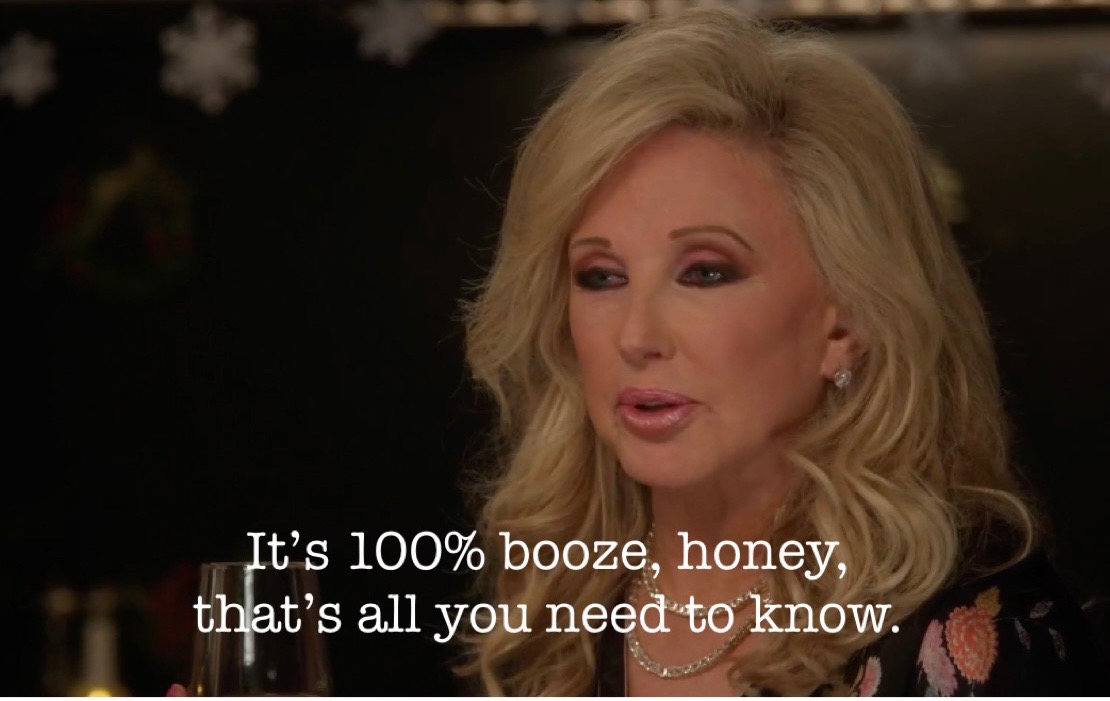
MHTV:  Maybe the success of ABC’s Golden Bachelor will help, too.  And that glass of yours, is it half full of champagne or whatever that that highly alcoholic beverage was they were drinking in that late night scene?

SZ:  Some crazy “Christmas concoction.”

MHTV: …That makes all of their truths come spilling out. 

SZ:  That’s what I’ll be drinking on December 2.  A lovely woman named Tami, whom I met on the first Golden Girls cruise in 2020, sent me these two beautiful martini glasses, and a bottle of Ciroc vodka, my favorite.  So I’ll be toasting the Divas.


Thursday, January 25, 2018

A Tribute to WKRP in Cincinnati creator Hugh Wilson (1943-2018), Part 2

Last week, the world lost another creator of classic TV when  the writer behind the beloved WKRP in CincinnatiHugh Wilson, died at age 74 in Virginia, where he had lived for over a decade.  Best known for executive producing WKRP’s 90 episodes, which gained popularity in syndication after its initial 1978-82 run, Wilson segued later into film, directing The First Wives Club and the first of the Police Academy movies.

Ten years ago, in the spring of 2008, I had the pleasure of conducting a long interview with Wilson for a WKRP story Watch! magazine.  Below is part 2, talking about the writing process and cancellation of WKRP and his follow-up, Frank's Place.


Must-Hear TV:  Once WKRP was on the air, I remember as a viewer having a hard time finding it, through many different time slots.  Did you feel that CBS supported the show?

Hugh Wilson:  That’s where the story changes.  I think everybody liked the show, but it went on the air and didn’t do well.  They took it off the air for “fine tuning.”  Frankly, I don’t know what fine tuning means.  Then or now.  There were some meetings – I don’t think any changes came out of it.  And then they put it back on the air.  They hung in with it, I think, because it got very good reviews.  The problem that for some reason we couldn’t get a stable time slot, and got moved all over the place.   When your own mother is calling you wanting to know when the show’s on, there’s something wrong.

But on the other hand, there’s an odd dividend to that.  When we went into syndication, a lot of people found the show for the first time.  WKRP was bigger in syndication success than any of the MTM shows.  And it certainly wasn’t in its first run on CBS.  I had a feeling that they liked the show but also didn’t love it, and didn’t hate it.  People are surprised that we were only on for four seasons.  We stayed on the air, but never really in a stable time slot.  So there were some hard feelings about that.


MHTV:  How did you find out that the show was cancelled?

HW:  I could kind of see it coming, but we weren’t allowed to write any kind of wrap up.  We were told it had to be a regular episode, because it was still under debate whether the show was going to get cancelled or not.  And then Grant [Tinker] got a call from Harvey Shepard who was running CBS at the time.  It became a choice whether they were going to keep us, or Alice.  So we were pretty confident it would be us, but it wasn’t – it was Alice.


MHTV:  What makes the show resonate this many years later?

HW:  I think the cast was the real deal.  Hell, I wrote or rewrote most of the scripts, but I would have to say myself that it was the cast.  I do think there was a tradition at MTM at that time to really try to write good characters.  Who not only get the laughs, but get a little deeper than that.  

I knew of Howard Hesseman from going way back.  He was a member of The Committee, which was like a Second City in San Francisco.  I had been watching him, had my eye on him.  He did a lot of guest shots on other shows.  Gordon Jump I saw on Soap.  He had kind of a recurring character, but he wasn’t a regular contractually.  Loni [Anderson] I just met – she hadn’t really been in town long from Minnesota.  Jan Smithers just came in to audition.  I was aware of Tim [Reid] because of the comedy routine he and a partner used to do on variety shows.  Frank Bonner and Gary Sandy were CBS favorites.  Gary had been on a Norman Lear show called All That Glitters.  And they liked him in that, so they were really pushing hard, and I was delighted to have him.  Richard Sanders I had never seen before.  After I met him, I looked at a tape of him – Richard had I think mainly been in dramas, a pretty serious actor, which surprised me, because I thought he was funnier than hell.

What happens is the writer creates the characters on paper and the actors come in and inhabit those.  So for a while, they’re following the script.  And then as the show moves on, pretty soon the writers are chasing the actors and taking their cues from them instead of them taking their cues from the script.  That’s a nice way of working, and we were lucky to have it that way.

One more actor I should mention:  Carol Bruce.  She wasn’t in the pilot.  A woman who used to be a famous actress was -- Sylvia Sidney.  And I think Sylvia kind of thought it was beneath her, so it was fun to switch it.  Carol was great.  You know at one point she was on the cover of Life magazine.  She was a wonderful song and dance woman.  I didn’t know that until I got to know her.


MHTV:  Were there any specific bits of business the actors brought to the characters?

HW:  It wasn’t specific lines or pieces of business.  Like Frank Bonner, playing Herb Tarlek.  Just the way he would stand, and the way he looked at Loni.  You know Loni doesn’t get credit for being as funny as she is – she’s a wonderful comic actress.  But one of the things that’s funny about her is she’s so strikingly good looking.  She made the IQ go down of every male character who walked into the room.  She made all the guys funny because they pretty much lost their cool the moment they saw her.  But Bonner lost it in the most wonderful way.  You realize at some point that when you start talking about Herb instead of Frank, like he’s in Cincinnati and he’s a real guy, that’s when you feel you’re writing well, that you’ve sort of bought the act yourself.


MHTV:  The WKRP ensemble included an African-American character – was that considered groundbreaking in 1978?

HW:  I hadn’t thought of that.  Frankly I hadn’t thought of the show as groundbreaking except I knew the music was a whole new deal.  Another thing I thought was setting us apart is something I wanted from the beginning, to really be a true ensemble.  Mary [Tyler Moore Show] was a wonderful ensemble, but they came in levels.  There was Mary and Lou Grant, and then the next level.  I was trying to keep it really egalitarian.  I didn’t always pull that off.  We were always saying, “Let’s do a show this week about this character.”  And the actors, if they were pretty light one week, they wouldn’t get their noses out of joint because they knew we’d be getting around to them, to one where their character would be really heavy.

There have been some shows where the behind-the-scenes ambience was just gruesome.  We’d tape on Friday, and we’d be walking out by 9PM.  But we would hear stories of other shows, with everybody yelling and screaming and fighting.  That is really not my style, and hopefully I had an impact on the people I hired.  I think you’ve got to be careful.  If you have a show and area so blessed that it’s successful, you could be with these people for years.


MHTV:  Were you involved in the 1990s WKRP reboot?

HW:  No.  I was honored that the show was being redone, but at the same time I didn’t much like the idea.  I thought what’s done is done.  By then I had moved to Virginia.  Whereas I could get involved in a movie, in order to do television you have to live [in Los Angeles].  I just never thought it was a good idea, but bless their hearts.


MHTV:  The show and its characters had such a distinctive look, too.

HW:  From the start, Tim said, “Look, I just don’t want to be the typical black guy,” and Loni said, “I don’t want to be the typical bimbo.”  Thank God Tim got involved in his wardrobe a little bit, because I needed help there.  I knew how Herb would dress, because at the time all I’d have to do is go through the Atlanta airport, and it would be wall-to-wall polyester leisure suits.  But just within our four years, his clothes got so out of fashion that the costume people finally had to go to golf course pro shops to find that crap.  So much changed in those four years, when there was a lot going on.  Dr. Johnny Fever, he’s got a serious problem with disco.  And I think disco was kind of over by the time we finished.


MHTV:  You gave Venus Flytrap a back story – real name Gordon Simms, and being a former teacher – that was a lot like Sting’s in real life.  Was that intentional?

HW:  I’d like to tell you I was.  The name “Venus Flytrap” just got into my head, and a lot of people said, “That’s a woman’s name.”  But then Tim Reid said, “I think that’s a good name,” and I don’t think anyone ever complained.


MHTV:  Do you still hear from fans about WKRP?

HW:  It’s amazing to me today how people will come up and start quoting lines to me.  Around here [in Virginia] people will ask, “What do you do?” and I say, “Nothing.”  Then they’ll say, “What did you do?”  I’ll start telling them, and they think I’m lying.  And then they say, “My God, WKRP!” and they start telling me about the show – I don’t have to say a word.


MHTV:  Who are the fans, most often?

HW:  It’s men and women, and they’re late 30s and older.  I teach a television writing course at the University of Virginia.  And the kids say to me – this happens every damn time – after class:  “Hey, Mr. Wilson, my parents wanted me to tell you how much they loved WKRP.”


MHTV:  Does the show have a legacy?  What did it change in television?

HW:  I don’t think it changed anything.  You know, Barney Miller was a show I admired, and I loved the idea of the workplace rather than the home.  The formula usually was office/home/office/home.  If you look at any of the MTM shows that’s how it would go.  I liked the idea of making the family the office.  I don’t know thought that that was new ground.  I thought we broke good ground, but I don’t know if we broke new ground.

I went on to do Frank’s Place, and was breaking all kinds of ground there.  I had directed a movie or two by then, and when I went back to television, I shot it one-camera.  I didn’t have much of a budget but tried to make it look like a feature.  I dumped the laugh track.  I got an Emmy out of it.  It all got hung on the same washline as a dramedy, because another show came out that was just like it.  But in fact I had no idea anybody was doing what I was doing.

The way Frank’s Place came about was, Cajun food was the rage, and everyone at the Ivy was eating blackened something or other.  They said, “You’re a Southerner… Cajun food….”  I went down to New Orleans a couple of times with Tim Reid.  We really researched that pretty thoroughly and came back with something that was not what [Hollywood] had in mind.  I was more over in the black part of town, not on Bourbon St., and was talking more about a Creole cuisine than Cajun.  I made it almost entirely black.  I thought it would be funny to have the white guy as the 6th man.  There were two white people in the regular cast.  That was amazing.  I hired one of the regulars, just a guy I met on an airplane, because I couldn’t find any actors who could do the specific New Orleans accent, to please my Southern ear.  It’s called a Ninth Ward or Eighth Ward accent.  So I hired this guy and bless CBS’ heart, they said,  “Wait a minute, one of the regulars you’re sending over for us to read, he’s never acted before in his life?”  His name is Don Yesso.  And the story was so amazing, Johnny Carson scooped him up immediately, so it worked well for us.


MHTV:  It sounds like by the time of Frank’s Place, you had some leeway.  But was there anything the network wouldn’t let you do on WKRP?


HW:  You won’t believe this based on what’s on today, but they were very, very careful about “hell”s and “damn”s.  And there could be no suggestion of drugs.  There could be something in the playing, not in any overt dialogue.  [Howard Hesseman] would always kind of play it like some kind of drug flashback, and he did talk about having flashbacks.  But we had written a scene once where he stepped out of the janitor’s closet fanning the air, right into the arms of the big guy, and that went right out.  That wasn’t even going to be discussed.  Clearly he must have had a joint in there.  I knew that wasn’t going to get in.  I sometimes think I put that in so I could get something else.  You do that – you kind of collect the chips – I caved on this and caved on that, so please let me have such and such.  It was such a different time in terms of that.

Tuesday, January 23, 2018

A Tribute to WKRP in Cincinnati creator Hugh Wilson (1943-2018), Part 1

Last week, the world lost another creator of classic TV when  the writer behind the beloved WKRP in Cincinnati, Hugh Wilson, died at age 74 in Virginia, where he had lived for over a decade.  Best known for executive producing WKRP’s 90 episodes, which gained popularity in syndication after its initial 1978-82 run, Wilson segued later into film, directing The First Wives Club and the first of the Police Academy movies.

Ten years ago, in the spring of 2008, I had the pleasure of conducting a long interview with Wilson for a WKRP story Watch! magazine.  Below is part 1, talking about Wilson’s transition into television, and the birth of his classic hit.


Must-Hear TV:  I’ve heard you mention in interviews that you didn’t initially set out to be in television. How did a Southern boy like you end up in Hollywood?

Hugh Wilson:  I’m from Florida, and went to the University of Florida.  After that, I went to New York and worked up north for a little bit, and then to Atlanta.  In New York, there weren’t many Southerners.  I think it kind of helped me, because it was like, “What’s this guy doing here?”  You get a little bit of a brand.  That was good.

I had been since college in the advertising business.  I was in Atlanta at an agency that no longer exists called Burton Campbell, which not big, but a very good creative agency.  I was the creative director there.  Then I left and got a job at MTM Productions, where I was able to sell some scripts to the Bob Newhart Show.  That was my first credit.  It was a great honor and was also a thrill.  I liked the show so much, and it was a big national icon of a hit.  And also Suzanne Pleshette, rest her lovely soul, and Bob Newhart were just such wonderful nice people.


MHTV:  What was it like, landing that first TV job?

HW:  Back then, MTM and Norman Lear and Bud Yorkin’s company [Tandem Productions] were sort of the Harvard and Yale of the independent producers.  Both of them had so many comedies on the air.  So it was a great break for me to get a job at MTM.  Two wonderful writers, Tom Patchett and Jay Tarses, allowed me to write on the Newhart show and then for the next two seasons, I was a staff writer on the short-lived Tony Randall Show, which was also CBS.  And then I created WKRP.  So I was very lucky, because I had only been in Hollywood for two and a half years before I suddenly found myself with a national show on network television.

I had no idea at the time what a lovely situation I was in.  It was only later in my career, when I saw how much pushing and shoving can go on, that I realized that Grant Tinker had created the most pleasant environment a writer could ever ask for.  I think what had something to do with that was that Jim Brooks was such an exceptional talent.  He and Allan Burns had created the Mary Tyler Moore Show, and of course Jim went on to become an Academy Award-winning director.  But I think Grant came to really rely on writers thanks to Jim and Allan.


MHTV:  What inspired WKRP?  Did you have a background in radio or in music?

HW:  No, but when I was in the advertising business in Atlanta, there was a bar there called Harrison’s that for some reason was kind of a media bar.  All the radio sales reps and disc jockeys and advertising people hung out there, and I knew a lot of people in radio, and I thought they were an interesting group.  When I had the idea, when I was asked by Grant, “Do you have any pilot ideas?”, I thought of a rock and roll station that was down on its luck.  And when CBS said, “Yeah, let’s look into that,” I went back to Atlanta, and my friends at the Top 40 rock station there let me come in and hang out for a couple of weeks.

I’m a big music fan, but I myself have no musical talent at all.  If I sing, people say, “You shouldn’t really do that.”  But that was part of the great fun of it.  When we were starting out, they said, “You know, it’s too expensive to pay for all the rights to al this music.”  Let’s do like they do on Happy Days, some soundalikes.  But I was pretty adamant that it had to be the real music.  So it was interesting – all the MTM shows had been shot on film, but we found that if we shot it on videotape, we could get a different kind of [music licensing] deal, like a variety show deal for the music.

At the time, film and videotape were pretty segregated:  “That’s a film lot” or “That’s a tape lot.”  So we became the first MTM show to leave the CBS Radford lot, and we went over to KTLA and were a videotape show just so we could afford the music.  We eventually moved back to the Radford lot in Studio City – that’s where MTM had most of their stuff.


MHTV:  Music was so important to WKRP.  Who chose the music for each episode?

HW:  I was picking the music, but then Howard Hesseman and Tim Reid, who were playing the DJs, asked if they could pick their own music.  I said yes, because they had excellent taste.  So unless I absolutely need a song for the story, they picked most of the music.  But it was very interesting because record labels started treating us almost like a radio station.  They would send me all this free stuff – it was wonderful.   I’d get standup posters, which I’d put in the set.  Once they saw I’d put posters on national television, I was just inundated with PR.


MHTV:  And why Cincinnati, of all places?  Why not Atlanta, if that’s what you knew?

HW:  I thought the show should be set in kind of not a big market.  That’s one reason; plus, I kind of wanted it somewhere in flyover country.   But I mainly chose the name by saying, “WKRP in Buffalo,” “WKRP in…” “Cincinnati” seemed to just roll off the tongue.  I had never been there in my life.  I’d like to tell you there was more thought in choosing it.  And then we came to really love Cincinnati, because when we went there with the cast, they treated us as if we were one of them.  They particularly liked Loni [Anderson].


MHTV:  Why CBS?  And what was the network’s initial reaction to the show?

HW:  MTM had a very special relationship with CBS, and so they pretty much took their shows there.  Later, Grant Tinker ended up taking the job as CEO at NBC.  But Rhoda, Mary and Bob were all CBS shows.  Also, CBS was, at least in my opinion, the “Tiffany Network.”  I think that was in everybody’s mind in those days.  CBS was first class, so people tried for that.

And at CBS, one of the reasons I thought I caught a break on WKRP is that, I came to discover, a lot of the people in the development department and those who had a say in new shows, had a background in radio, and so they had a proprietary love for it.  Immediately they would say, “When I was in radio…” and they’d start pitching me bits and pieces and funny things that happened to them.

In fact, the most famous show we did was a Thanksgiving show, “Turkeys Away,” where we threw turkeys out of a helicopter.  And I had gotten that from a station manager in Dallas.  He was fired and couldn’t get a job for a year after that.   I had asked him, “Can you think of any remarkable things?”  And in five minutes, he told me the whole thing.  I thought “Oh my God, this is going to be so much fun,” and realized he had just given me my Emmy.  And that episode all pretty much all came from this fellow’s lips.


Coming soon:  part 2:  the four-season life and death of WKRP in Cincinnati